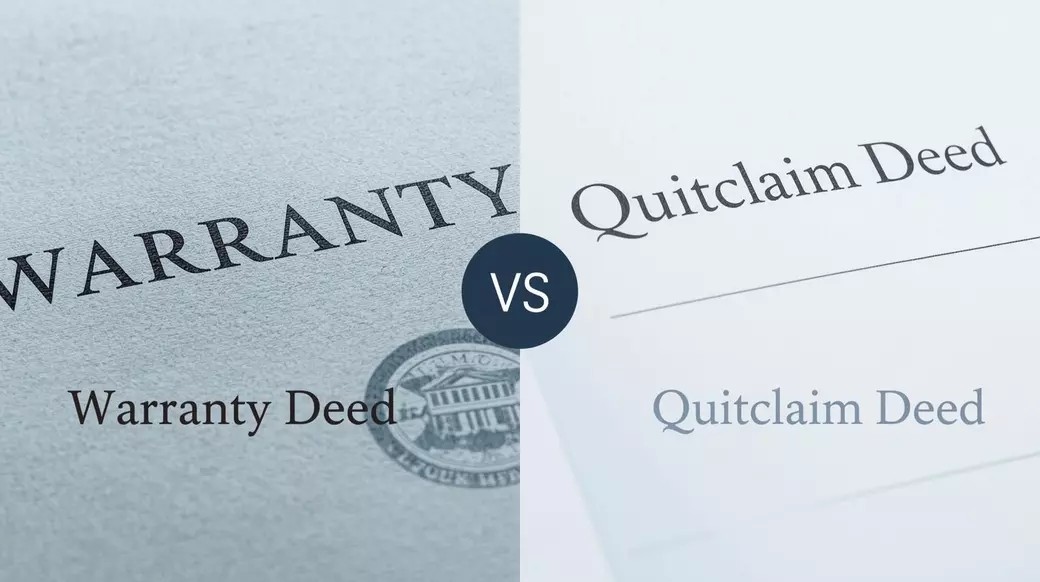
When buying or transferring real estate in Florida, one of the most important documents in the process is the deed. The deed is the legal instrument that transfers ownership of property from one party to another, but not all deeds offer the same level of protection. Two of the most common types are the Warranty Deed and the Quitclaim Deed, and understanding the difference can protect you from costly mistakes.
What Is a Warranty Deed?
A Warranty Deed provides the highest level of protection for the buyer. When a property is conveyed with a warranty deed, the seller (or “grantor”) guarantees that they legally own the property and have the right to sell it. They also promise that the title is free of any undisclosed liens, claims, or encumbrances.
If any issue with the title arises after closing, even something that occurred before the seller owned the property, the seller is legally responsible for defending the buyer’s ownership rights.
n Florida, most traditional real estate transactions use a warranty deed because it ensures clear and marketable title for the buyer. This is also the deed type your title company or attorney typically prepares when you purchase a home through a standard sale.
Key benefits of a Warranty Deed:
Guarantees clear title and full ownership rights
Protects the buyer against title defects
Commonly used in financed or arm’s-length real estate sales
What Is a Quitclaim Deed?
A Quitclaim Deed (sometimes called a “quick claim deed”) offers no warranties or guarantees. It simply transfers whatever ownership interest the grantor may have, if any, to the recipient (the “grantee”).
That means if the grantor doesn’t actually have full ownership or if there’s a title defect, the grantee has no legal recourse against them.
Quitclaim deeds are typically used in non-sale situations, such as:
Transferring property between family members
Adding or removing a spouse from a title after marriage or divorce
Transferring property into a trust or business entity
Correcting minor title errors
Because quitclaim deeds don’t involve title guarantees or insurance, they are not recommended for traditional property purchases where money is exchanged.
Key characteristics of a Quitclaim Deed:
Transfers only the grantor’s ownership interest (if any)
Offers no protection against liens or title issues
Best for simple, non-sale property transfers
Warranty Deed vs. Quitclaim Deed: The Key Differences
Feature
Warranty Deed
Quitclaim Deed
Title Guarantee
Full title protection for buyer
No guarantees
Used In
Traditional home sales
Family or internal transfers
Title Insurance
Typically issued
Not usually issued
Buyer Protection
Strong
None
Risk Level
Low
High
Which Deed Should You Use?
If you’re buying or selling a home in Southwest Florida, a Warranty Deed is almost always the right choice. It provides peace of mind and ensures that you’re receiving a property with a clear, insurable title.
However, if you’re transferring property for estate planning, between relatives, or into a trust, a Quitclaim Deed may be appropriate and faster to execute.
Your title company or real estate attorney can guide you on the correct deed type for your specific situation.
The Role of the Title Company
In Florida, the title company plays a critical role in the transfer process. They:
Prepare the deed
Conduct a title search to uncover liens or judgments
Issue title insurance (with warranty deeds)
Coordinate closing and recording of the deed
Choosing an experienced title company ensures your transaction is handled properly and your ownership rights are protected.
Final Thoughts
Understanding the difference between a Warranty Deed and aQuitclaim Deed helps protect your real estate investment. Whether you’re purchasing a home, transferring property to family, or planning for the future, it’s always smart to consult with a trusted Realtor and title professional who can ensure your transaction is done correctly.
Selling your home during the holidays can actually be a huge advantage, serious buyers are out, competition is lower, and your home can feel even more inviting with a little seasonal charm. But when your house is on the market, it’s important to strike the right balance between festive and fresh. The goal? Let buyers picture their holiday memories here, not just yours.
Here’s how to decorate tastefully while keeping your home market-ready and photo-perfect.
🎄 Keep It Cozy, Not Cluttered
Decorating your home for the holidays can make it feel warm and welcoming, but too much can make rooms feel smaller. Stick to a few well-chosen pieces that complement your home’s style. A simple wreath on the front door, a tasteful garland on the mantel, and a beautifully decorated tree (scaled appropriately for the space) go a long way.
Pro tip: If your photos are already online, keep the decorations subtle enough that they don’t date your listing, you don’t want it looking like a January leftover in February search results.
🕯️ Highlight, Don’t Hide
Your holiday décor should highlight your home’s best features, not compete with them.
Have a beautiful fireplace? Frame it with soft greenery and twinkle lights.
Love your kitchen island? Add a simple bowl of ornaments or fresh pine.
Big windows or sliders with a view? Skip heavy drapes or hanging décor that blocks natural light.
Keep it bright, airy, and open, buyers are drawn to homes that feel spacious and inviting.
✨ Stick to a Neutral Color Palette
While bright reds and bold greens are festive, they can be overpowering in listing photos. Opt for neutral tones like white, silver, gold, and soft metallics, they photograph beautifully and work with any style of home.
A few subtle touches, like white lights, pinecones, and greenery, add a classic holiday glow without distracting from your home’s features.
🏡 Don’t Forget Curb Appeal
First impressions matter, especially in real estate. Keep your exterior decorations simple and elegant:
A tasteful wreath on the door
White or warm lights outlining the roofline
A few potted poinsettias or evergreens by the entryway
Avoid inflatable displays, excessive lighting, or anything that takes focus away from your home’s architecture.
🍪 Appeal to the Senses
Selling a home is as much emotional as it is practical. Soft seasonal scents like cinnamon, vanilla, or pine can make your home feel cozy and welcoming, just avoid anything too strong or artificial.
If you’re hosting an open house, bake a small batch of cookies or warm a pot of apple cider. It’s a classic trick for a reason, people connect through their senses.
🎁 Less Is More — Especially in Photos
Your listing photos are your home’s first showing. Before your photographer arrives, simplify your décor and remove personal or religious items that might make it harder for buyers to imagine themselves living there.
Your home should feel festive, not personal, think holiday magazine cover, not family gathering snapshot.
🌟 Final Thought
A little holiday sparkle can make your home stand out in the best way possible. Keep it simple, tasteful, and balanced, and you’ll create an atmosphere that makes buyers feel right at home from the moment they walk in.
If you’re thinking about selling this season or want personalized tips for staging your home, I’d be happy to help you make your move as seamless and stress-free as possible, even during the holidays!
VA Loans Make HomeoBuilderwnership More Accessible for Military Buyers
For many military service members and veterans, VA loans remain one of the most valuable benefits of service. Backed by the U.S. Department of Veterans Affairs, this program helps qualified buyers purchase a home with fewer barriers. Most importantly, VA loans remove several financial obstacles that often delay homeownership.
Because no down payment is required, buyers can move forward sooner. In addition, competitive interest rates and no private mortgage insurance help keep monthly payments lower. As a result, VA loans make owning a home far more attainable.
However, the Department of Veterans Affairs guarantees part of the loan, which reduces lender risk. Because of that guarantee, lenders can offer better terms to eligible buyers.
Instead of requiring a large down payment or perfect credit, VA loans focus on service eligibility. Ultimately, this program exists to help those who served achieve homeownership.
Key Benefits of a VA Loan
No Down Payment
With a VA loan, qualified buyers can finance up to 100% of the home’s value. As a result, this option removes one of the biggest hurdles to buying.
No Private Mortgage Insurance
Most conventional loans require PMI with less than 20% down. VA loans eliminate this cost entirely. Because of this, monthly payments are often much lower.
Competitive Interest Rates
Since the VA backs part of the loan, lenders often offer lower interest rates. Over time, that difference can lead to significant savings.
Flexible Credit Guidelines
VA loans allow more flexibility with credit history. Therefore, more buyers have a realistic path to approval.
Lower Closing Costs
The VA limits certain fees veterans can be charged. As a result, closing costs are often lower than with traditional loans.
Assumable Loan Option
When selling a home, another qualified buyer may assume the existing VA loan. In a rising rate market, this feature becomes especially valuable.
Who Qualifies for a VA Loan?
Eligibility depends on military service, not income. In general, you may qualify if you meet one of the following requirements:
You are an active-duty service member or veteran
You received an honorable discharge
You served 90 days during wartime or 181 days during peacetime
You served six years in the National Guard or Reserves
You are the surviving spouse of a service member who died in the line of duty or from a service-related condition
Because each situation is unique, confirming eligibility early helps avoid delays.
Understanding the VA Funding Fee
Although VA loans do not require PMI, most borrowers pay a one-time VA funding fee. This fee helps keep the program available for future generations of veterans.
The amount varies based on down payment and prior VA loan use. However, some veterans with service-connected disabilities may be exempt entirely.
Using a VA Loan to Refinance
VA loans also offer refinance options for current homeowners.
For example, the Interest Rate Reduction Refinance Loan, often called a VA Streamline Refinance, allows eligible borrowers to lower their rate with limited documentation. Meanwhile, the VA Cash-Out Refinance lets homeowners refinance up to 100% of their home’s value and access equity.
Both options provide flexibility depending on financial goals.
Buying a Home in Southwest Florida with a VA Loan
Southwest Florida offers many opportunities for VA buyers. Areas like Fort Myers, Cape Coral, and Estero provide a wide range of housing options. Buyers can choose from single-family homes, condos, golf communities, or waterfront properties.
Because many local lenders understand VA guidelines, transactions often move smoothly. As a Southwest Florida Realtor experienced with VA loans, I work closely with those lenders to keep timelines on track. More importantly, my focus stays on finding homes that fit each buyer’s lifestyle and long-term plans.
Final Thoughts
VA loans are more than a financing option. They represent a well-earned benefit that removes common barriers to homeownership. When used wisely, they open doors to stable and affordable housing.
If you are a veteran or active-duty service member considering a home in Fort Myers, Cape Coral, Estero, or nearby areas, let’s explore your options together.
At the center of Brightwater Lagoon in North Fort Myers lies a six-acre, man-made lagoon with sparkling turquoise water that looks like something straight out of the Caribbean. Residents enjoy swimming, paddleboarding, kayaking, and even lounging on the white sandy beach, all without leaving home. The lagoon is surrounded by cabanas, tiki huts, and shaded hammocks that make every day feel like a vacation. The swim-up bar, water obstacle course, and on-site dining options bring an atmosphere of fun and relaxation that’s unlike anything else in Lee County.
Resort-Style Amenities
Beyond the lagoon, residents enjoy a wide range of amenities designed for both activity and relaxation:
Clubhouse and fitness center
Resort-style pool and splash pad
Mini golf and playgrounds
Walking and biking trails
Dog park and open green spaces
Everything about Brightwater Lagoon is created to capture the essence of Florida’s outdoor lifestyle.
New Homes by Lennar and D.R. Horton
Homes in Brightwater Lagoon are built by Lennar and D.R. Horton, offering a variety of single-family homes with open layouts, energy-efficient designs, and modern finishes. You’ll find everything from cozy two-bedroom homes to spacious four-bedroom floor plans, many with waterfront views or easy access to the lagoon. Brightwater Lagoon is a golf-cart-friendly community, and many residents use them to travel to the lagoon, parks, and events within the neighborhood.
Homeowners appreciate the low-maintenance lifestyle, affordable HOA fees, and the added peace of mind that comes with being outside the flood zone. With new construction opportunities still available, it’s a great time to secure your piece of paradise in this growing North Fort Myers community.
Ideal North Fort Myers Location
Located off Pritchett Parkway, Brightwater Lagoon is just minutes from I-75, giving residents quick access to Downtown Fort Myers, Cape Coral, and Punta Gorda. Shopping, dining, and entertainment at The Forum, Downtown River District, and Gulf Coast Town Center are all within easy reach.
You’ll enjoy the peaceful feel of a tucked-away neighborhood, with the convenience of being close to beaches, marinas, golf courses, and top-rated schools.
Explore Homes for Sale in Brightwater Lagoon
As a longtime Southwest Florida Realtor®, I’ve helped many buyers and sellers find their perfect fit in communities like Brightwater Lagoon.
From builder incentives to insider knowledge on the best home sites, I’ll guide you through every step and make the process seamless and stress-free.
When buying or selling a home in Florida, one of the most important parts of the purchase contract is the contingency section. Contingencies are essentially “safety nets” built into the contract, they give buyers certain rights to cancel or renegotiate if specific conditions aren’t met. For sellers, understanding these contingencies is equally important, as they impact the timeline and security of the transaction.
Here’s a breakdown of the most common contingencies you’ll see in a Florida purchase contract:
Inspection (or Cancellation) Contingency
Florida contracts, such as the “As Is” Residential Contract for Sale and Purchase, typically include an inspection period (often 7–15 days). During this time, the buyer can hire a licensed home inspector to evaluate the property.
If major issues are discovered, the buyer may cancel the contract without penalty.
Alternatively, the buyer may request repairs or a price adjustment.
If the inspection reveals no concerns, the buyer can still cancelbased on the fact that “if the buyer determines, in buyer’s sole discretion, that the property is not acceptable to Buyer, Buyer may terminate the contract by delivering written notice of such election to Seller prior to expiration of Inspection Period.”
This contingency protects buyers from hidden issues, while sellers benefit from a clear timeline to resolve potential problems. If the buyer terminates the contract during the Inspection/Right to Cancel period, the earnest money deposit is returned to the buyer, at which point both the buyer and seller are released of all further obligations under the contract.
Financing Contingency
Also known as a loan approval contingency, this clause protects buyers who need a mortgage to purchase the home. It typically allows a set number of days for the buyer to:
Apply for financing
Receive loan approval
Notify the seller in writing
If the buyer cannot obtain financing within the agreed timeframe, they may cancel the contract and recover their deposit. This gives buyers peace of mind, while sellers know early on whether financing is secure.
Appraisal Contingency
When a buyer is financing a home purchase, the lender will order an appraisal to confirm the property’s value. The appraisal contingency ensures that:
If the home appraises at or above the contract price, the deal moves forward.
If the appraisal comes in low, the buyer may renegotiate the purchase price or cancel the contract without losing their deposit.
This is especially important in competitive Florida markets, where bidding wars can sometimes drive offers above appraised value.
Home Sale Contingency
Some buyers need to sell their current home before purchasing a new one. A home sale contingency makes the purchase contract dependent on the buyer successfully closing their existing property within a set timeframe.
While this protects buyers from carrying two mortgages, sellers should carefully consider the risks, as it can delay or complicate the transaction.
Title Contingency
In Florida, clear title is essential. A title contingency allows the buyer to review the title commitment to ensure the property is free of liens, unpaid taxes, or ownership disputes. If issues can’t be resolved before closing, the buyer may cancel the purchase contract.
HOA/Condo Review Contingency
For buyers purchasing in a Florida homeowners association (HOA) or condominium community, this contingency allows time to review the association’s rules, financials, and documents. If the buyer is unhappy with restrictions or fees, they may cancel within the review period.
Insurance Contingency
Given Florida’s unique risks (hurricanes, flooding, and rising insurance costs), securing affordable homeowners insurance is critical. Some contracts include an insurance contingency, allowing buyers to walk away if they can’t obtain coverage.
Why Contingencies Matter in a Purchase Contract
Contingencies give buyers flexibility and protection while providing sellers with structured deadlines. Both parties benefit when contingencies are clearly outlined, understood, and managed by an experienced real estate professional.
Bottom Line: Whether you’re buying or selling a home in Florida, contingencies can make or break a deal. Having a knowledgeable realtor by your side ensures you understand your options, meet your deadlines, and protect your interests every step of the way.
Thinking of buying or selling a home in Florida? Contact me today to discuss your goals and get expert guidance on navigating contracts, contingencies, and the entire closing process.
If you’ve been thinking about buying a home, the end of the year might just be the perfect time to make it happen. While most people are focused on holiday plans and year-end celebrations, smart buyers are taking advantage of unique opportunities that come with purchasing a home before December 31st.
Not only can you get a great deal in a quieter market, you could also lock in valuable financial benefits, including Florida’s Homestead Exemption, which can save you thousands in property taxes every year.
Here’s why now might be the ideal time to make your move.
🏡 1. Secure Your Florida Homestead Exemption
In Florida, your Homestead Exemption can reduce the taxable value of your primary residence by $50,000, saving you hundreds, sometimes thousands, of dollars on your annual property tax bill.
But here’s the key: To qualify for the exemption for the upcoming year, you must own and occupy your home as of January 1st.
That means if you close on your new Florida home before December 31st and make it your primary residence, you’ll be eligible to file for the exemption in the new year, a big financial win for early buyers.
Pro tip: Don’t forget to file with your county’s Property Appraiser’s Office between January 1st and March 1st to secure your exemption.
💰 2. End-of-Year Motivated Sellers
As the holidays approach, many sellers become more motivated. Maybe they’re relocating for work, downsizing, or simply want to close before year’s end. That urgency can work in your favor.
You might find:
More room for negotiation on price and terms
Seller credits toward closing costs
Flexible closing dates that work with your schedule
With fewer buyers competing during the holiday season, you could snag your dream home for a better deal.
📉 3. Potentially Lower Interest Rates and Builder Incentives
Lenders and builders often roll out year-end incentives to meet their annual goals. You might find:
Reduced mortgage rates or points
Lower down payment options
Builder bonuses such as upgraded finishes or appliance packages
Timing your purchase before December 31st can position you to take advantage of these seasonal savings.
🎁 4. Tax Benefits Before the Year Ends
Buying a home before the end of the year could also help you maximize your 2025 tax deductions. Depending on your situation, you may be able to deduct:
Mortgage interest
Property taxes paid at closing
Certain closing costs
As always, consult your tax professional, but these deductions can make a meaningful difference when it’s time to file.
🕯️ 5. Enjoy the Holidays in Your New Home
Beyond the financial perks, there’s something special about celebrating the holidays in your new space. When buying a home, you’ll start the new year with a fresh beginning, building memories and equity at the same time.
Imagine hosting your first holiday dinner, decorating your new front porch, or watching fireworks from your own backyard, it’s the perfect way to ring in the new year.
📋 Buying a Home Key Takeaway
Buying a home before the end of the year isn’t just about timing, it’s about strategy. Between potential savings, lower competition, and valuable tax benefits like Florida’s Homestead Exemption, closing before December 31st can be a smart move that pays off long-term.
If you’re ready to explore your options, I’d love to help you find the right home and guide you through the process, making your move seamless, stress-free, and perfectly timed for success.
Few things are more disheartening than the moment a real estate home sales contract dissolves. Whether you’re a buyer who’s mentally moved into their dream home or a seller counting on the closing proceeds, a failed sale can cost time, money, and significant emotional stress.
For anyone navigating the competitive Fort Myers or Southwest Florida housing market, understanding the most common pitfalls is the key to a successful closing. Here are the 7 critical reasons why home sales fall apart and actionable advice on avoiding them.
1. The Home Inspection Nightmare
The inspection contingency is designed to protect the buyer, but it’s the number one cause of broken deals. A standard pre-listing home inspection can uncover serious issues like foundation problems, a faulty roof, or major HVAC repairs.
Seller’s Tip: Get a pre-listing home inspectionbefore you put your house on the market. This allows you to address major issues upfront or disclose them, preventing a last-minute buyer surprise that leads to them walking away.
Buyer’s Tip: Focus on “material defects” (safety and structure) rather than minor repairs. Be reasonable with your requests for repairs or credits.
2. Failure to Secure Financing (The Mortgage Trap)
Many home sales fall apart because the buyer’s loan application is denied, even if they were pre-approved. Mortgage lenders look for any change in the buyer’s financial status right up until closing.
Common Causes: The buyer bought a new car, opened a new credit card, quit a job, or simply had a lower-than-expected appraisal that impacts the Loan-to-Value (LTV) ratio.
Action Plan: Buyers must freeze all major financial changes between contract and closing. A strong pre-approval from a reliable, local lender is essential for a faster closing.
3. Appraisal Issues: The Value Gap
When the lender’s appraisal comes in lower than the agreed-upon sale price, it creates a “value gap” and a major problem. Lenders will not fund a loan for more than the appraised value.
Solutions: The buyer can cover the difference in cash, the seller can lower the price to meet the appraisal, or both parties can negotiate a middle ground. Without an agreement, the real estatetransaction is likely to fail.
4. Title Troubles and Boundary Disputes
A clear title is mandatory. If the title search uncovers a lien, an undisclosed heir, or an encroachment (a structure on the property that crosses the boundary line), the home sale can be immediately jeopardized.
Protection: Always get title insurance. A reputable title company will flag these issues early on and work to resolve them before the closing date.
5. Buyer’s Remorse and Cold Feet
Sometimes, after the initial excitement, a buyer simply gets cold feet, often over the size of the mortgage or an unexpected family change. While frustrating, if they back out during the inspection contingency period, they do not lose their earnest money deposit.
6. Contract Disputes Over Contingencies
The written contract outlines crucial dates for inspections, financing commitments, and closing. Missing a deadline, failing to agree on repair credits, or trying to renegotiate terms after the fact can lead to mistrust and cause the entire real estate deal to unravel.
Pro Tip: Your experienced real estate agent is your best defense here, ensuring all deadlines are met and negotiations are handled professionally.
7. HOA Approval Denial
In communities with a Homeowners Association (HOA), the buyer must be approved by the board. If a buyer fails the HOA’s background or credit check, the sale is over.
The Fix: Sellers should inform their agent about all HOA requirements, and buyers must submit their application immediately after going under contract.
Keeping Home Sales Together: Your Next Step
The best defense against failed home sales is working with a top-rated real estate professional who has a track record of guiding clients through these complex issues. Don’t let your dream home slip away.
If you’re thinking about buying a home, one of the first questions that probably comes to mind is, “What exactly does my monthly mortgage payment include?” It’s a great question, and one every smart buyer should understand before making an offer.
Most people assume their monthly mortgage payment only covers the loan amount and interest, but in reality, there’s more to it. Your monthly payment is typically made up of four main parts, commonly known as PITI: Principal, Interest, Taxes, and Insurance.
1. Principal
This is the portion of your payment that goes directly toward paying down your loan balance. In the early years of your mortgage, only a small portion goes to principal, but as time goes on, a larger share is applied to reducing what you owe.
2. Interest
Interest is the cost of borrowing money from the lender. The interest rate you secure will have a big impact on your total monthly payment, and the overall cost of your loan over time. Even a small change in rate can make a noticeable difference.
3. Property Taxes
Most lenders include property taxes in your monthly mortgage payment and hold those funds in an escrow account until your tax bill comes due. That way, your taxes are paid automatically each year without you having to worry about saving separately.
4. Homeowners Insurance
Similar to property taxes, your insurance premium is often rolled into your monthly payment and held in escrow. This protects both you and your lender if your home is damaged by fire, storms, or other covered events.
Other Possible Additions to Your Monthly Mortgage Payment
Depending on your situation, there may be additional costs included in your monthly mortgage payment:
Private Mortgage Insurance (PMI): If your down payment is less than 20%, your lender may require PMI, which protects them if you default on your loan.
HOA Fees: If you live in a condo or a community with a homeowners association, you’ll likely have monthly or quarterly HOA fees. These are usually paid separately but should still be factored into your overall budget.
Why It Matters
Understanding what’s included in your mortgage payment helps you plan ahead and avoid surprises. When you know exactly where your money is going, it’s easier to budget confidently, and to compare different loan options when you’re shopping for a home.
Final Thoughts
Buying a home is one of the biggest financial decisions you’ll ever make. Knowing how your monthly payment breaks down is the first step toward making a smart investment.
If you’re thinking about buying, or just want a clearer picture of what you can afford, I’d be happy to walk you through your options and connect you with a trusted local lender.
If you’ve been searching for luxury lakefront living surrounded by natural beauty, WildBlue in Estero, Florida is where it all begins. This exclusive, master-planned waterfront community spans over 800 acres of freshwater lakes and scenic preserves, offering an unmatched blend of tranquility and resort-style comfort. Perfectly located between Naples and Fort Myers, WildBlue delivers an exceptional lifestyle with elegant homes, world-class amenities, and the relaxed sophistication that defines Southwest Florida living.
Luxury Home Community
WildBlue is known for its stunning collection of homes built by Southwest Florida’s most trusted luxury builders, including Stock Development, Pulte Homes, WCI, and Lennar. Every residence features thoughtful architectural design, spacious floorplans, and breathtaking lake or preserve views. Whether you prefer a contemporary coastal feel or timeless elegance, there’s a home here that reflects your lifestyle and taste.
Resort-Style Amenities
Life at WildBlue feels like a permanent vacation. The community’s crown jewel is the Lake Club, a world-class amenity center offering a resort-style pool, outdoor cabanas, and lakeside dining. Stay active with a state-of-the-art fitness center, yoga studio, tennis courts, pickleball courts, and kayaking or paddleboarding right from your backyard. There’s also a full social calendar designed to bring residents together through events, clubs, and gatherings year-round.
A Perfect Estero Location
WildBlue’s location puts you right in the heart of Southwest Florida. Minutes from Coconut Point Mall, Miromar Outlets, Florida Gulf Coast University, and Southwest Florida International Airport, residents enjoy convenient access to shopping, dining, entertainment, and beaches. Yet, despite its prime location, WildBlue maintains the peace and privacy of a natural sanctuary.
Why Homebuyers Love WildBlue
Homebuyers are drawn to WildBlue for its gated security, luxury amenities, lakefront homes, and strong waterfront community feel. It’s more than a place to live, it’s a lifestyle that blends elegance, recreation, and natural beauty in one breathtaking setting.
Looking to make WildBlue your next home?
As a trustedSouthwest Florida Realtor, I can help you explore available listings, new construction opportunities, and resale homes in this incredible community. Contact me today to schedule a private tour or learn more about what makes WildBlue one of Estero’s most desirable places to live.
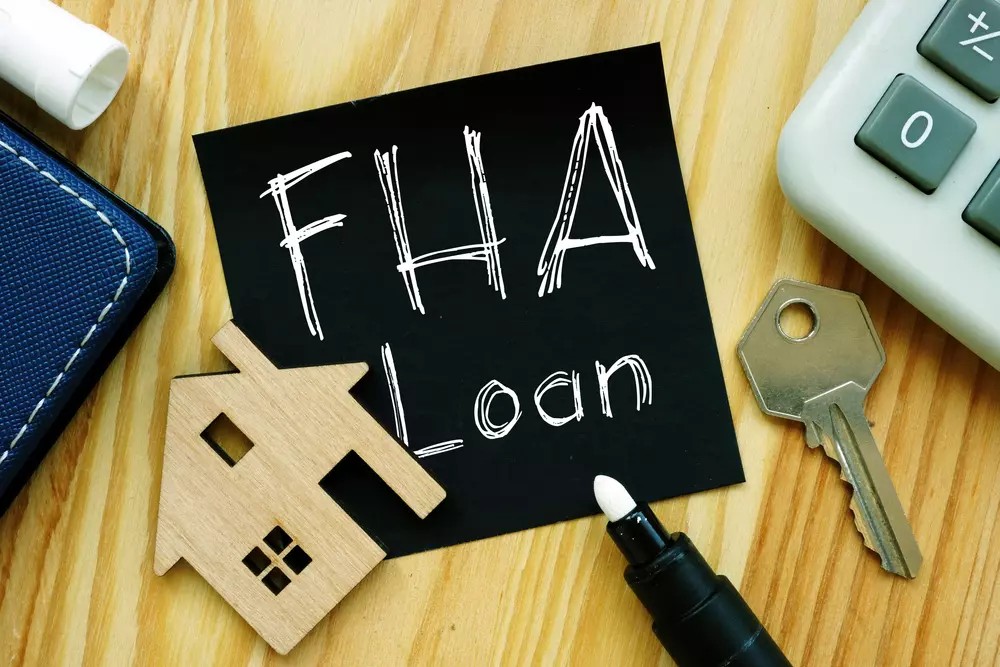
If you’re thinking about buying a home and have heard about FHA loans, chances are you’ve also heard a few myths along the way. An FHA loan is a popular choice for first-time buyers and those who may not have perfect credit, but they’re also surrounded by a lot of outdated or flat-out false information.
As a professional real estate expert, I’m here to set the record straight and give you the real facts. Whether you’re a first-time buyer or returning to the market, this guide will clear up common misconceptions and help you decide if an FHA loan might be the right fit for you.
Myth #1: You Have to Be a First-Time Homebuyer to Qualify
Truth: You do not have to be a first-time buyer to use an FHA loan.
This loan program is available to anyone who meets the credit, income, and down payment requirements. In fact, many repeat buyers use FHA loans if they need more flexible credit qualifications or a lower down payment.
Myth #2: FHA Loans Are Only for Low-Income Borrowers
Truth: FHA loans are designed to help a wide range of homebuyers, not just those with lower incomes.
Yes, they’re ideal for people with modest financial situations, but there’s no maximum income limit. What matters most is that your debt-to-income ratio and credit profile align with FHA guidelines.
Myth #3: You Need Perfect Credit
Truth: FHA loans are known for being credit-friendly.
While a conventional loan might require a higher credit score, you could qualify for an FHA loan with a score as low as 580 with a 3.5% down payment, or even 500 with a 10% down payment. This makes it one of the most accessible loan options for buyers working on rebuilding their credit.
Myth #4: You Can Only Buy a Fixer-Upper
Truth: FHA loans can be used for all types of properties, not just fixer-uppers.
You can use an FHA loan to buy a move-in-ready single-family home, condo, or even a multifamily property (up to four units) as long as you live in one of the units. There is a special FHA 203(k) loan for homes that need renovations, but standard FHA loans work just fine for homes in great condition.
Myth #5: An FHA Loan Take Too Long to Close
Truth: With the right lender and agent, an FHA loan doesn’t take much longer than a conventional loan.
The key is working with professionals who understand the FHA process and keep things moving smoothly. In most cases, FHA loans can close in 30-45 days, just like other loan types.
Myth #6: Sellers Don’t Want to Accept FHA Loan Offers
Truth: Many sellers accept FHA offers, especially in balanced or buyer-friendly markets.
Yes, FHA loans do have some property condition requirements, but those are mainly about safety and livability. If the home is in good shape and priced right, a seller is just as likely to accept an FHA buyer as they are a conventional one, especially with a solid offer and pre-approval letter in hand.
Myth #7: You’ll Be Stuck with Mortgage Insurance Forever
Truth: FHA mortgage insurance does last longer than on conventional loans, but it’s not necessarily forever.
If you put down 10% or more, you can request to remove the mortgage insurance after 11 years. And remember, many buyers refinance into a conventional loan later to remove it completely once they’ve built up enough equity.
Final Thoughts: Don’t Let Myths Cost You the Right Loan
FHA loans offer real flexibility, especially for buyers who may not qualify for a conventional mortgage. But misinformation can cause hesitation, and hesitation can cost you a home you love.
The best way to know which loan is right for you? Talk to a trusted lender and work with a real estate agent who understands your goals.
Still have questions about FHA loans or want help finding a lender who can guide you through the process? I’d be happy to help. Reach out today and let’s take the stress out of your next move.


 Facebook
 X
X
 Pinterest
 Copy Link